
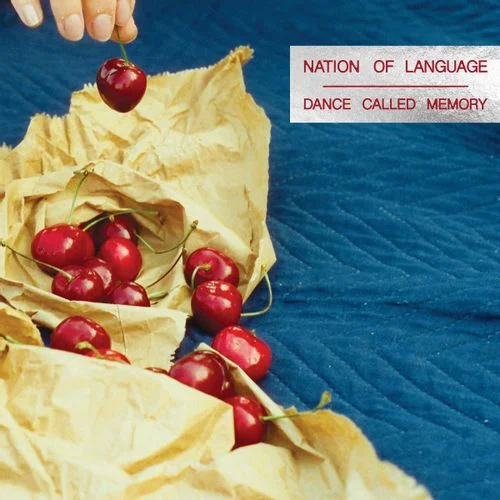
Description
//Sub Pop//
£24.99 – 1xLP, Limited Edition “Loser Edition” White & Red Corona Coloured Vinyl
A spectral, spacious exploration of the possibilities of synth-driven music.
Synthpop, minimal wave, post-punk, goth, new romantic — fans and critics alike have dug deeply into their vintage thesauruses to describe the beguiling work of Nation of Language. And if you can’t precisely define the band, that’s the point. Frontman, Ian Richard Devaney, has become prodigious in expanding what synthesizer-driven music can evoke, such that his output is as much an extrasensory journey as it is an all-too-human destination. With that experience in mind, he wrote the band’s fourth album — the spectral, spacious ‘Dance Called Memory’ — in the most humble of ways: chipping away at melancholia by sitting around and strumming his guitar.
On ‘Dance Called Memory’, the band once again collaborated with friend and Strange Disciple producer Nick Millhiser (LCD Soundsystem, Holy Ghost!). “What’s so great about Nick is his ability to make us feel like we don’t need to do what might be expected of us,” says synth player Aidan Noell, who, along with bassist Alex MacKay, rounds out the Nation of Language lineup. They imbued ‘Dance Called Memory’ with a shifted palette — sampling chopped-up drum breaks on “I’m Not Ready for the Change” for a touch of Loveless-era My Bloody Valentine or smashing all of the percussion of “In Another Life” through a synthesizer to cast a shade of early-2000s electronic music. Ultimately, the hope was to weave raw vulnerability and humanity into a synth-heavy album.
“There is a dichotomy between the Kraftwerk school of thought and the Brian Eno school of thought, each of which I’ve been drawn to at different points. I’ve read about how Kraftwerk wanted to remove all the humanity from their music, but Eno often spoke about wanting to make synthesized music that felt distinctly human,” Devaney says. “As much as Kraftwerk is a sonically foundational influence, with this record I leaned much more towards the Eno school of thought. In this era quickly being defined by the rise of AI supplanting human creators I’m focusing more on the human condition, and I need the underlying music to support that… Instead of hopelessness, I want to leave the listener with a feeling of us really seeing one another, that our individual struggles can actually unite us in empathy.”


Reviews
There are no reviews yet.